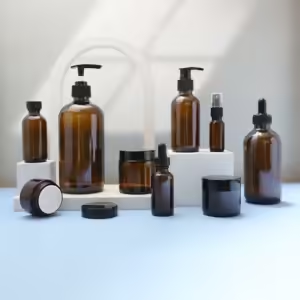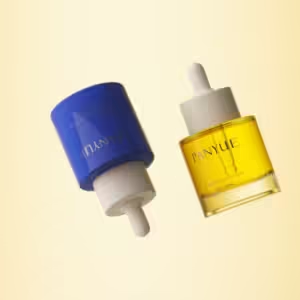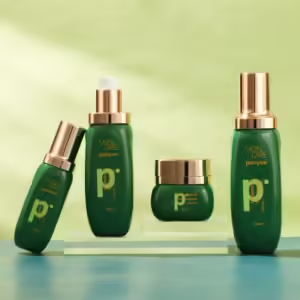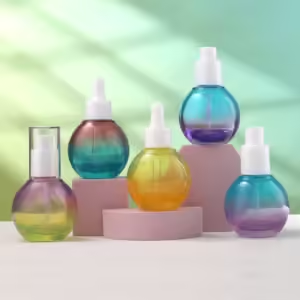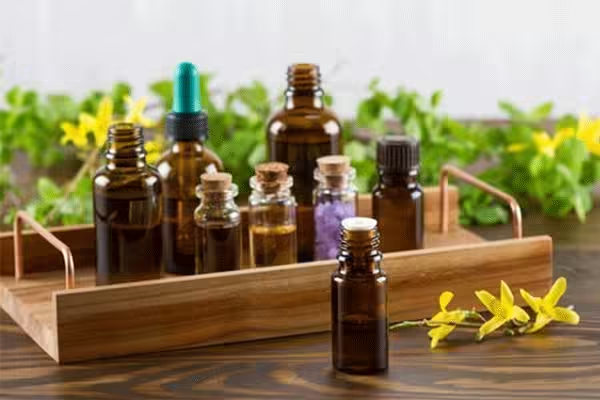
Lorsque vous manquez d'huiles essentielles, Que faites-vous avec les bouteilles? Réutilisation bouteilles d'huile essentielle est une excellente option pour leur donner une seconde vie tout en réduisant les déchets et en protégeant l'environnement. Dans cet article, Nous allons explorer comment nettoyer en toute sécurité et réutiliser les bouteilles d'huile essentielle en verre, Apprenez à bricoler des bouteilles d'huiles essentielles et explorez de nouvelles façons de décorer votre maison..
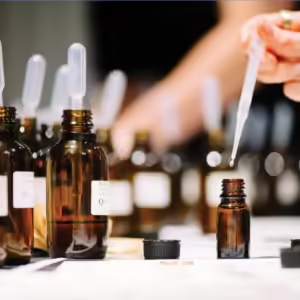
Outils pour nettoyer les bouteilles d'huile essentielle en verre
Préparez les bons outils pour accélérer le processus de nettoyage, plus efficace, et plus sûr.
Brosse à bouteille: Utilisé pour éliminer les résidus de l’intérieur de la bouteille.
Agents de nettoyage: pour décomposer ou assainir les résidus d'huile tenaces, comme le vinaigre, bicarbonate de soude, et du jus de citron.
Serviette douce: pour essuyer les bouteilles afin de les garder au sec ou pour essuyer les dernières traces d'huile ou de savon.
Récipient de trempage: pour tremper les bouteilles en verre pour ramollir les adhésifs
Des cotons-tiges ou des cure-pipes: pour nettoyer le goulot ou le bouchon des bouteilles et autres endroits plus difficiles à nettoyer
Tutoriel pour nettoyer les étiquettes et les résidus des bouteilles d'huile essentielle en verre
Étape 1: Faire tremper la bouteille
Faire tremper les bouteilles d'huile essentielle en verre dans un récipient d'eau tiède ou chaude (environ 120°F à 140°F ou 50°C à 60°C) pour 10 à 15 minutes, ou dans l'eau froide pour 30 minutes.
Étape 2: Retirer l'étiquette de la bouteille
Décollez délicatement l'étiquette en commençant par un coin. Pour les étiquettes plus dures, utilisez une spatule en plastique pour soulever les coins avant de décoller.
Étape 3: Enlever les résidus de colle
Trempez un chiffon dans du vinaigre ou de l'alcool et essuyez la zone de matériau adhésif résiduel
Étape 4: Nettoyer l'intérieur et l'extérieur de la bouteille
À l'intérieur: Ajoutez quelques gouttes de savon doux à l'eau tiède et faites tourner la solution à l'intérieur de la bouteille.. Frottez l'intérieur avec un goupillon et nettoyez jusqu'à ce qu'il ne reste plus de résidus d'huile..
EXTÉRIEUR: Désinfectez la bouteille en la trempant dans un 1:2 vinegar-water mixture and then wipe the bottle clean with a cloth.
Étape 5: Dry the bottle
Dry bottles naturally by inverting them in an air-conditioned area or by drying them directly with a soft towel.
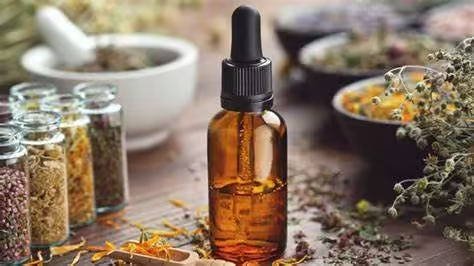
Alternative methods to remove labels and residue from glass essential oil bottles
Freeze: Place the glass bottle in the freezer for 10-15 minutes to make the adhesive lose its bond, then gently remove the label.
Oil Melt Method: Apply olive oil or coconut oil to the adhesive area, rub gently, and leave for a few minutes, then wipe off the residue with a cloth.
Label remover: Gently rub a professional adhesive remover or adhesive remover wipes over the area with adhesive residue until the surface of the bottle is completely clean.
Creative uses for reusable glass essential oil bottles
For DIY beauty products, such as essential oil blends, homemade facial serums, lip gloss or lip balm
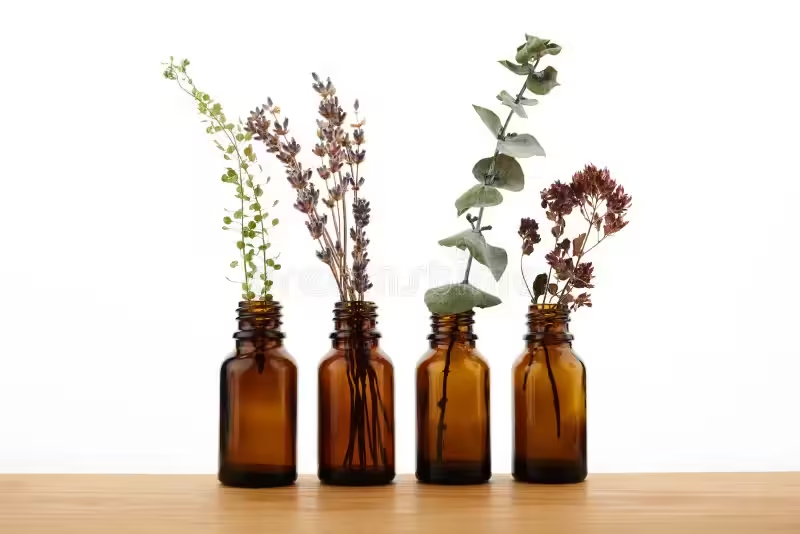
For home decoration – put flowers into an elegant vase, or fill it with sand, pebbles, or colorful beads and put it on the desktop as a decorative piece to embellish the home atmosphere.
For storage – such as jewelry, buttons, spices, and glitter, to keep the room neat while maintaining a chic aesthetic.
For gardening – for growing some small succulents, air plants, or herbs
For crafts – use acrylic paint to DIY paint bottles to make decorations and gifts, or to make unique pendants or charms for necklaces and bracelets.
Conclude
Cleaning and reusing glass essential oil bottles is an easy and rewarding way to incorporate sustainability into your lifestyle. By following the proper steps of cleaning, label removal, and creative reuse, vous pouvez garantir que vos bouteilles auront une seconde vie tout en contribuant à un monde plus vert. Que vous fabriquiez vos produits de beauté, créer une décoration d'intérieur unique, ou organiser de petits objets, ces bouteilles offrent des possibilités infinies. Alors rassemblez vos outils, soyez créatif, et commencez à réutiliser vos bouteilles d'huile essentielle en verre dès aujourd'hui!